Scaling Amazon-Native Brands & Omnichannel Transition
Scaling Amazon-Native Brands & Omnichannel Transition
Challenge
Amazon Dependency & Low-Margin Structure
During recent years, numerous consumer brands accelerated their expansion by focusing primarily on Amazon US. While this platform-centered strategy supported rapid customer acquisition and substantial sales volume, it also introduced clear operational limitations. In particular, brand owners developed a high dependency on Amazon and experienced revenue concentration within a single geographic market. When these Amazon-native brands sought to enter emerging regions such as the Middle East, standard cross-border shipping models created practical challenges, including international inventory carrying costs, extended payment cycles, local regulatory requirements, and limited localized customer support capabilities.
Furthermore, digital-first brands typically lack established offline distribution networks in overseas markets. Within the Amazon US marketplace itself, intense competition and continuous promotional discounting systematically suppressed retail prices, establishing an inherently low gross margin structure. With these narrow product margins, brand owners lacked the commercial flexibility necessary to partner with traditional brick-and-mortar retailers, distributors, and independent dealers who require standard trade margins. As a result, many Amazon-native brands faced difficulties expanding beyond online marketplaces and establishing the physical retail presence needed for sustainable, long-term market participation.
The Solution
Multi-Platform Integration & Strategic Price Restructuring
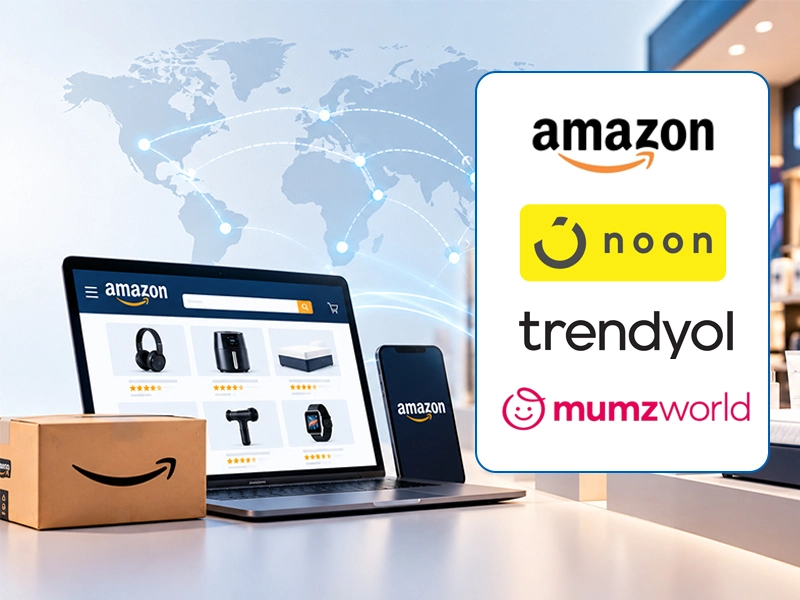
To address these commercial constraints, our organization established an omnichannel operational model that integrates regional digital platforms with structured commercial management. We deployed an in-house marketplace operations team to manage direct 1P vendor relationships and 3P seller accounts across major regional platforms, including Amazon, Noon, Trendyol, Carrefour, and Mumzworld. This multi-platform infrastructure enabled immediate market launches for international brands such as Renpho, Zinus, and Cuckoo. In parallel, we launched dedicated direct-to-consumer (D2C) brand websites and coordinated local digital marketing initiatives to build regional brand equity beyond marketplace search results.
This operational framework was applied in our partnership with Renpho. Prior to this engagement, the brand operated under a cross-border structure, maintaining regional inventory in a local third-party logistics (3PL) facility to service Middle East Amazon orders. This remote management model introduced logistical friction and constrained working capital. Under this remote setup, reverse logistics posed a substantial financial risk: lacking dedicated local facilities for inspection and restocking, customer returns frequently resulted in direct inventory write-offs, substantially elevating localized operational risk expenses. Upon finalizing the commercial agreement, our organization completed an upfront purchase of Renpho’s entire local 3PL inventory, providing immediate liquidity and addressing the brand’s cash-flow requirements. Additionally, centralizing ownership of regional supply enabled our team to establish structured channel governance. By helping address gray-market distortions and supporting greater cross-channel pricing consistency, we protected brand integrity while creating a viable commercial foundation to support subsequent brick-and-mortar retail expansion.
The Impact
Balanced Omnichannel Revenue & Sustainable Regional Scale
With channel integrity and a viable commercial structure established, our team expanded distribution into organized retail chains and independent electronics dealers nationwide. This physical expansion provided consumers with direct access to authorized products, hands-on product demonstrations, and verified local warranty support. At the same time, regional retail partners secured the operational feasibility required to stock and actively support the product portfolio. Within two years, Renpho’s sales mix became significantly more balanced across digital and physical channels.
This case illustrates our capability to support Amazon-native brands in diversifying their distribution channels, reducing cross-border friction, and establishing commercially viable retail operations. By bridging the gap between digital marketplaces and physical store networks, we provide international brand owners with an organized framework to reduce operational risk and achieve steady commercial growth across the Middle East.
Let's Build Growth Together.
Discuss a Partnership to build, scale and grow your brand across our regional markets.